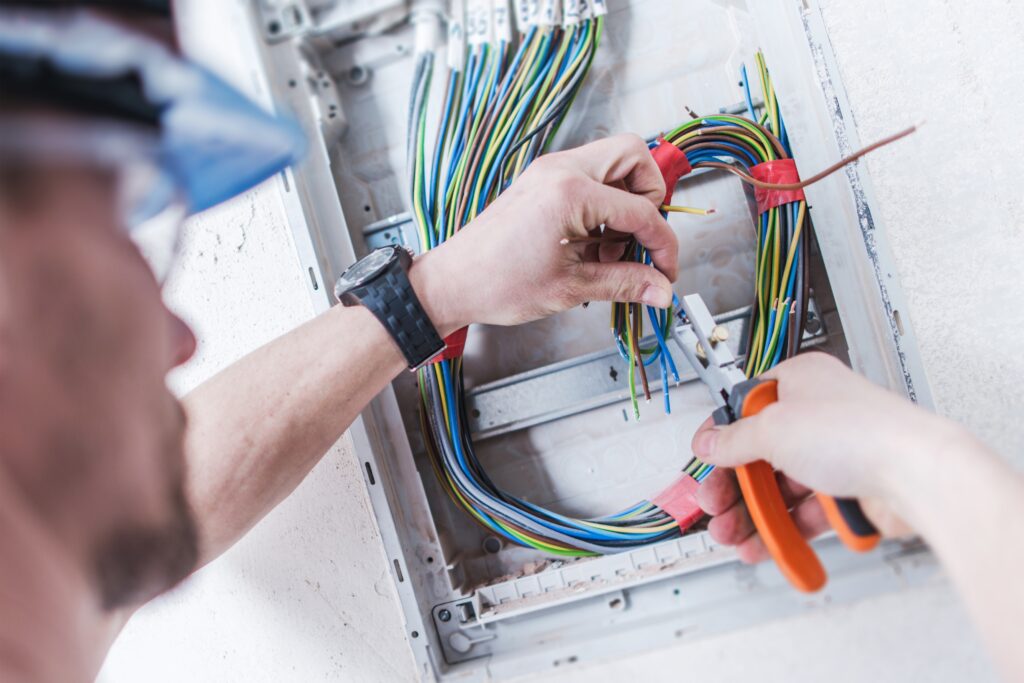
A commercial electrician in Hollidaysburg, PA installs, repairs, and maintains the wiring, electrical panels, lighting, and power distribution systems that keep local businesses, warehouses, and industrial facilities running safely and to code. That work is not a bigger version of home electrical service. It runs on three-phase power, higher amperage, stricter inspection rules, and tighter uptime demands, which is why most Blair County businesses hire a contractor who works on commercial buildings every day.
Adams Electric has served Hollidaysburg, Altoona, Duncansville, and the surrounding Blair County area since 1919. This guide explains what commercial electrical work covers, when your business needs it, what Pennsylvania’s permit and safety rules require, and how to choose a licensed and insured contractor you can trust with your building.
Key Takeaways
- A commercial electrician handles higher-voltage, three-phase systems that power offices, stores, warehouses, and manufacturing facilities, not just standard 120-volt residential circuits.
- Lighting is one of the largest controllable electrical costs in a commercial building, and switching to LED can cut lighting energy use sharply.
- Commercial electrical work in Pennsylvania is governed by the National Electrical Code and typically requires permits and inspection, so licensing matters.
- Panel and switchboard upgrades are the most common trigger for calling a commercial electrician, usually when a business adds equipment, space, or load.
- Always confirm a contractor is licensed, insured, and experienced with commercial and industrial jobs before signing.
What does a commercial electrician do?
A commercial electrician builds and maintains the electrical systems inside non-residential buildings, from new construction wiring to day-to-day repairs. On a commercial or industrial job in the Hollidaysburg area, that scope usually includes:
- New construction and facility expansion wiring
- Electrical panel upgrades and switchboard upgrades
- Commercial and industrial lighting design, installation, and retrofits
- Power distribution networks and equipment wiring for machinery
- Commercial and industrial generator installation
- Parking lot lighting, exterior signage lighting, and security lighting
- Data, phone, internet, and audio-visual cabling
- Diagnosis and correction of code violations, plus ongoing maintenance
The safety stakes are higher than most business owners realize. The Occupational Safety and Health Administration lists electric shock, electrocution, fires, and explosions as the primary hazards of electrical work, and names missing ground-fault protection, discontinuous grounding paths, and equipment misuse among the leading causes of electrical injuries (OSHA, Electrical). A qualified commercial electrician is trained to eliminate those risks, not just to make the lights turn on. You can see the full range of work on the Adams Electric commercial and industrial services page.
How is commercial electrical work different from residential?
Commercial electrical work differs from residential in three ways: power, code, and consequence. A typical home runs on single-phase 120/240-volt service. Offices, retail buildings, warehouses, and manufacturing plants often run on three-phase power at much higher amperage to feed HVAC systems, machinery, and heavy lighting loads at once.
Those systems also carry stricter code and inspection requirements, and downtime costs a business real money. When a breaker trips at home, one room goes dark. When a switchboard fails at a Duncansville warehouse, a whole production line can stop. That is why commercial and industrial electrical wiring is designed with redundancy, capacity headroom, and future load in mind. Adams Electric recently handled a 5000-amp underground service installation for an expanding industrial facility, a project that involved trenching, conduit, utility coordination, and a custom design built to eliminate power bottlenecks. You can read about that 5000-amp underground service project in Duncansville for a real example of the scale involved.
How much can a commercial lighting retrofit save?
Lighting is a small share of the bill with an outsized efficiency gap
Sources: ENERGY STAR, Learn About LED Bulbs; EIA, Use of Energy in Commercial Buildings; Adams Electric project record.
A commercial lighting retrofit can cut lighting energy use dramatically, because LED technology is far more efficient than the fluorescent and incandescent fixtures many older Hollidaysburg buildings still use. According to ENERGY STAR, LED lighting products produce light up to 90% more efficiently than incandescent bulbs (ENERGY STAR, Learn About LED Bulbs). Incandescent bulbs release roughly 90% of their energy as heat, which is wasted money and added cooling load in a commercial space.
Lighting is also a bigger share of a building’s energy bill than most owners assume. The U.S. Energy Information Administration reports that lighting accounted for about 10% of total energy use across all U.S. commercial buildings in 2018, in the same range as ventilation, with space heating the single largest use at about 32% (EIA, Use of Energy in Commercial Buildings). Because lighting runs for long hours and is one of the easiest systems to modernize, a commercial lighting retrofit in Hollidaysburg is often the fastest way to lower a monthly electric bill without disrupting operations.
When does a business need a panel or switchboard upgrade?
A business needs an electrical panel or switchboard upgrade when its power demand outgrows its existing service, which is the most common reason companies call a commercial electrician. Warning signs include breakers that trip when equipment runs together, an outdated or undersized panel, flickering lights under load, or a planned expansion that adds machinery, HVAC, or new circuits.
An electrical panel upgrade in Hollidaysburg increases the amperage and circuit capacity your building can safely handle, and it brings older equipment up to current code. For larger facilities, a switchboard upgrade distributes higher loads across the building with proper protection. If you are budgeting for one, the Adams Electric guide on what electrical panel replacement costs walks through the factors that drive the price. Skipping the upgrade and overloading an old panel is one of the grounding and overload risks OSHA warns about, so it is not a repair to postpone once the signs appear.
Do commercial electrical jobs need permits in Pennsylvania?
Yes. Most commercial electrical work in Pennsylvania requires a permit and inspection, because it falls under the state’s Uniform Construction Code and must meet the National Electrical Code (NFPA 70). Permitting exists to confirm that wiring, grounding, and equipment are installed safely, which matters most in buildings where employees and customers spend their days.
A licensed commercial electrician handles the permit process, schedules the required inspections, and makes sure the finished work passes. That protects your business from failed inspections, insurance disputes, and liability if a fire or injury is ever traced to unpermitted work. For a plain-language overview of the rules, see the Adams Electric explainer on whether you need a permit for electrical work in Pennsylvania. The short version: for a commercial job, assume you do, and let your contractor manage it.
How to choose a commercial electrician in Hollidaysburg
Choose a commercial electrician in Hollidaysburg by confirming four things before you sign: licensing, insurance, commercial experience, and local track record. Use this checklist:
- Licensed and insured. Confirm the contractor is a licensed electrical contractor and carries current liability insurance, so you are protected if something goes wrong.
- Real commercial and industrial experience. Ask for examples of panel upgrades, lighting retrofits, or new construction wiring on buildings like yours. Home electricians do not always scale to three-phase commercial systems.
- Local and responsive. A contractor based in Blair County can respond faster to problems and understands local permitting and utility coordination.
- Clear on code and permits. A trustworthy commercial electrician talks openly about permits, inspection, and code compliance instead of avoiding them.
Adams Electric has met that bar for Hollidaysburg and Duncansville businesses since 1919 as a licensed and insured electrical contractor. If you are planning a project or dealing with an electrical problem at your facility, you can reach the team through the Adams Electric contact page.
Frequently Asked Questions
What is the difference between a commercial and residential electrician?
A residential electrician works on single-phase 120/240-volt home systems, while a commercial electrician works on higher-amperage, often three-phase systems that power offices, stores, warehouses, and industrial equipment. Commercial work also carries stricter code and permit requirements.
Do I need a permit for commercial electrical work in Hollidaysburg, PA?
In most cases, yes. Commercial electrical work in Pennsylvania falls under the Uniform Construction Code and the National Electrical Code, and typically requires a permit and inspection. A licensed contractor handles this for you.
How much does a commercial lighting retrofit save?
Savings depend on your current fixtures and run hours, but LEDs produce light up to 90% more efficiently than incandescent bulbs, according to ENERGY STAR. Because lighting is roughly 10% of commercial building energy use, retrofitting long-running fixtures is one of the quickest ways to lower an electric bill.
How do I know if my business needs an electrical panel upgrade?
Common signs are breakers that trip when equipment runs together, flickering lights under load, an old or undersized panel, or a planned expansion. A commercial electrician can inspect your service and recommend the right amperage.
Does Adams Electric serve Duncansville and Altoona too?
Yes. Adams Electric serves Hollidaysburg, Altoona, Duncansville, and the surrounding Blair County area for commercial, industrial, and residential electrical work.