
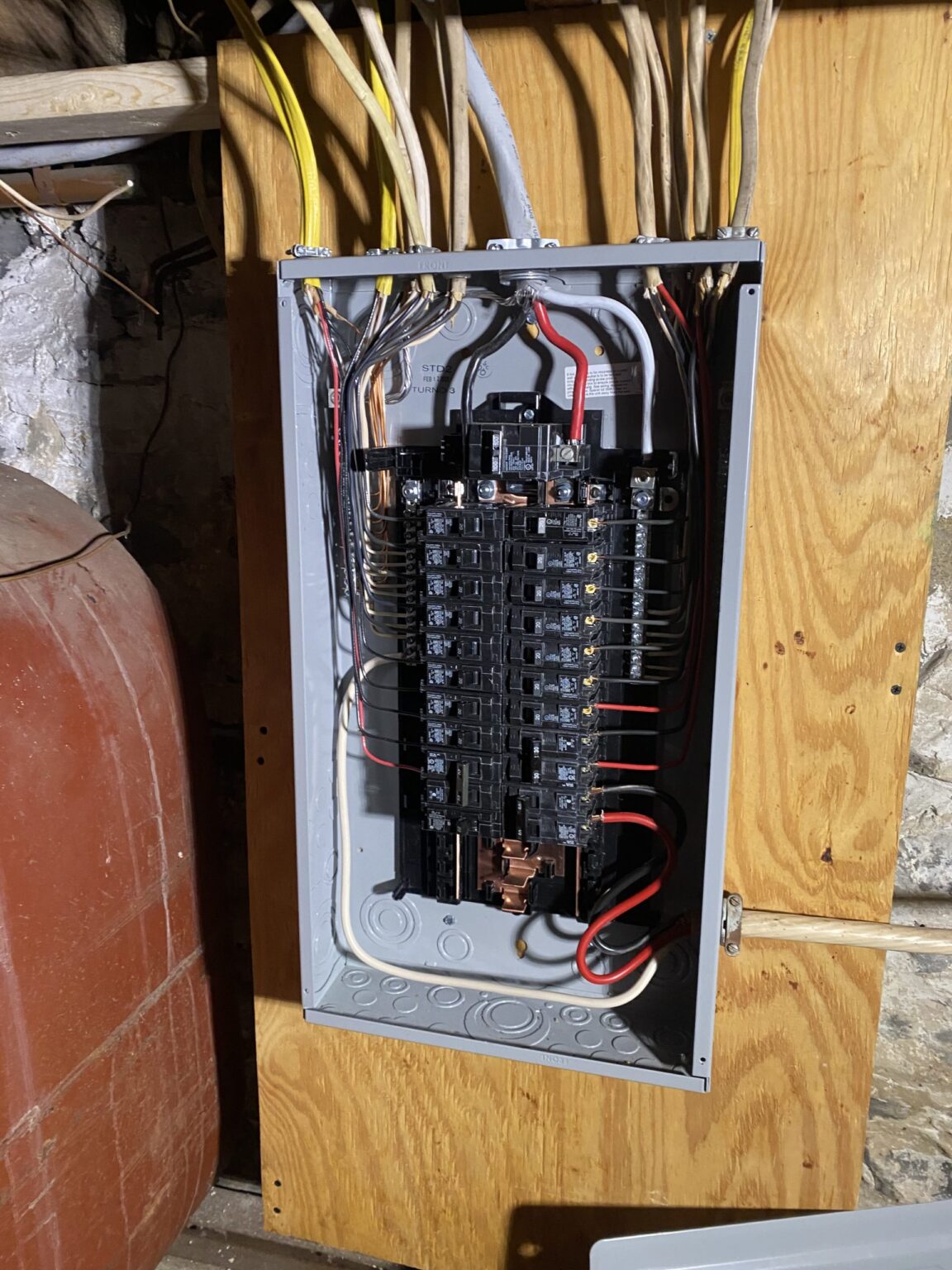
The cost of a home EV charger installation in Hollidaysburg is set less by the charger on the wall and more by the electrical work behind it. A straightforward install that reuses a nearby 240-volt circuit sits at the low end, while a job that needs a panel upgrade, a long wiring run to a detached garage, and a permit lands much higher. The U.S. Department of Energy notes that Level 2 charging equipment runs on 240 volts and that some homes “might have insufficient electric capacity” to add it, which is the single biggest reason two quotes for the same charger can look nothing alike. This guide walks through every factor that moves the number so you can budget with confidence before you call an electrician in Blair County.
Key Takeaways
- Most home EV charger projects are Level 2 units that run on a dedicated 240-volt circuit, so the price is driven by the electrical work, not the charger box.
- The biggest cost swing is whether your electrical panel has spare capacity or needs an upgrade before a charging circuit can be added.
- Wiring distance, the breaker, permits and inspection, and whether the parking spot is in an attached or detached garage all move the final number.
- A federal tax credit covered 30% of the cost (up to $1,000) for equipment placed in service through June 30, 2026, but that window has closed, so confirm current federal, state, and utility incentives before you budget.
- Have a licensed electrician run a load calculation and pull the permit so the install passes inspection and protects your home.
Level 1 versus Level 2: what you are actually paying to install
Every plug-in vehicle comes with a Level 1 cordset that plugs into a standard 120-volt household outlet. It is the cheapest way to start charging because it often needs no new wiring, but it is slow, adding only a few miles of range per hour. That is why most Hollidaysburg homeowners install a Level 2 station. The Department of Energy confirms that Level 2 equipment uses 240 volts, the same supply a clothes dryer or electric range draws, and delivers a far faster charge.
The speed comes from a dedicated 240-volt circuit, which is the real work your installer is quoting. A Level 2 charger commonly needs its own circuit rated for 40 to 60 amps, a correctly sized breaker, and a protected cable run from the panel to the parking spot. The federal fuel economy program notes that fully recharging an EV battery can take 3 to 12 hours depending on the vehicle and the charging rate, so sizing the circuit correctly is what turns an overnight top-up into a full charge by morning. Most of what you pay for is this circuit, not the plastic enclosure.
The cost factors that actually move the price
Because the Department of Energy warns that a home’s existing service may not have the spare capacity for Level 2 charging, no two installs cost the same. Here are the factors that decide where your quote lands:
- Panel capacity. If your panel has an open double-pole slot and enough spare amperage, adding a circuit is simple. If it is full or already near its limit, you may need a panel upgrade first, which is the largest single cost driver.
- Distance and the wiring run. A charger mounted on the garage wall a few feet from the panel is inexpensive to wire. Running cable across the house, up through finished walls, or out to a detached garage adds labor, conduit, and sometimes trenching.
- Breaker and circuit hardware. A dedicated 240-volt circuit needs the right breaker, wire gauge, and a disconnect where code requires one. Heavier amperage means heavier, more expensive copper.
- Hardwired versus plug-in unit. A plug-in charger on a NEMA 14-50 outlet and a hardwired unit carry different material and labor costs, and higher-amperage units need thicker wire.
- Permits and inspection. Pennsylvania requires permitted, inspected electrical work, and that fee is part of a legitimate quote.
- Finish work. Patching drywall, mounting height, weatherproofing an outdoor location, and cleanup all add time.
A good electrician prices these for your specific home rather than quoting a flat number, which is why an on-site assessment is the only way to get an accurate figure. You can see the range of residential work we handle on our residential services page.
What you are paying for
Level 2 needs twice the voltage
Supply voltage by charging level. The 240-volt circuit is the real installation work.
U.S. Department of Energy, Alternative Fuels Data Center.
Does your electrical panel need an upgrade first?
The average U.S. home already buys about 10,791 kilowatt-hours of electricity a year, roughly 899 kWh a month, according to the U.S. Energy Information Administration, and a daily-driven EV can add thousands of kilowatt-hours on top of that. A Level 2 charger is one of the largest continuous loads in a house, so your electrician has to confirm the panel can carry it safely.
The deciding factor is your service size and how much of it is already spoken for. Many older Hollidaysburg and Altoona homes still run on 100-amp service, which can leave little headroom once central air, an electric range, and a water heater are accounted for. A 200-amp panel usually has room, but only a load calculation proves it. If the numbers do not work, a panel upgrade comes first, and that becomes the biggest line on the quote. We cover this in depth in our guides to an electrical panel upgrade in Hollidaysburg and what an electrical panel replacement costs.
Permits and inspection in Pennsylvania
Home EV charger wiring is not a job to skip the paperwork on. The Department of Energy states plainly that “appropriate permits may be required from the local building and permitting authorities” for home charging equipment, and in Pennsylvania a new 240-volt circuit is exactly the kind of work that calls for a permit and an inspection under the state’s Uniform Construction Code.
That permit and inspection fee is a real part of your cost, and it is money well spent. An inspected install protects your homeowner’s insurance, keeps you compliant for resale, and confirms the circuit was sized and grounded correctly for a heavy, long-duration load. Be cautious of any bid that is cheap because it leaves the permit out. For a fuller explanation, read our guide to electrical permits in Pennsylvania.
Federal and local incentives: check before you budget
Incentives can offset a chunk of the cost, but the rules changed recently, so verify current programs rather than assume. The federal Alternative Fuel Vehicle Refueling Property Credit let homeowners claim 30% of the cost, up to $1,000 per item, for charging equipment placed in service at a main home. Two catches matter for Blair County residents. First, the home had to sit in an eligible census tract, specifically a low-income community or a non-urban tract, so not every address qualified. Second, the IRS lists that credit as applying to property placed in service through June 30, 2026, a window that has now closed.
Because that federal window has lapsed, do not build it into your budget without checking the current status. Look instead at whatever federal, Pennsylvania, and local utility rebates are active when you install, since utilities sometimes offer their own charging or off-peak incentives. When a credit does apply, individuals claim it with IRS Form 8911.
What it costs to run an EV charger at home
The install is a one-time cost, but the electricity is ongoing, and it is worth sizing up front. With the average home already using around 899 kilowatt-hours a month per the EIA, an everyday EV can push your household’s consumption up noticeably. Pennsylvania’s average retail electricity price was 12.51 cents per kilowatt-hour across all sectors in 2024 according to the EIA, and residential rates typically run higher than that blended figure, so your real per-mile cost depends on your utility and your plan.
Even so, charging at home overnight is usually far cheaper per mile than gasoline and almost always cheaper than public fast charging. If you want to understand the labor side of any electrical project before you commit, our guide to how much an electrician costs in Central PA explains how pros price their time.
Why the installer matters in Blair County
The Department of Energy recommends using “safety-certified equipment” and a “certified electrical contractor” for home charging, and that advice pays off on a circuit this large. A charger installed by an untrained hand can overload a panel, trip repeatedly, or fail inspection, turning a cheap bid into an expensive redo.
Adams Electric is a family-owned electrical contractor that has kept Blair County homes powered since 1919, serving Hollidaysburg, Altoona, Duncansville, and the surrounding communities. We run the load calculation, size the circuit correctly, pull the permit, and schedule the inspection so your EV charger is safe and code-compliant from day one. When you are ready for an on-site assessment and an accurate quote, contact our team.
Frequently Asked Questions
How much does a home EV charger installation cost in Hollidaysburg?
There is no single number, because the price depends on your panel capacity, the distance of the wiring run, the breaker and cable needed, permit fees, and whether a panel upgrade is required first. A simple install near the panel is modest, while a job that needs a service upgrade and a long run costs considerably more. An on-site assessment is the only way to get an accurate figure for your home.
Do I need a 240-volt circuit for a home charger?
For a Level 2 charger, yes. The Department of Energy confirms Level 2 equipment runs on 240 volts, the same supply as an electric range or dryer, and it needs its own dedicated circuit. A Level 1 charger uses a standard 120-volt outlet but charges much more slowly.
Will I need to upgrade my electrical panel?
Maybe. If your panel has a free slot and enough spare amperage, no. If it is full or your home still runs on older 100-amp service, a panel upgrade may be required before a charging circuit can be added. A load calculation by a licensed electrician is what settles it.
Is a permit required to install an EV charger in Pennsylvania?
A new 240-volt circuit generally requires a permit and inspection under Pennsylvania’s Uniform Construction Code, and the Department of Energy notes permits may be required for home charging equipment. A reputable installer includes the permit and inspection in the quote.
Are there tax credits for installing a home charger?
A federal credit covered 30% of the cost up to $1,000 for equipment placed in service through June 30, 2026, but only for homes in eligible census tracts, and that window has now closed. Check for current federal, state, and utility incentives at the time you install, and claim any eligible federal credit with IRS Form 8911.
Planning a home EV charger and want a clear, no-surprises quote from a licensed Blair County electrician? Reach out to Adams Electric to schedule an on-site assessment.