
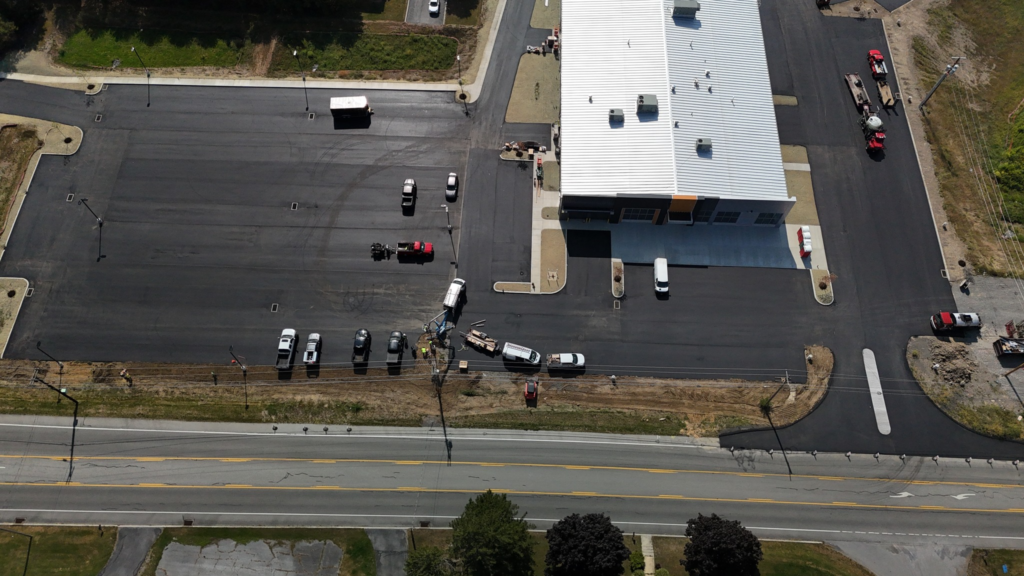
New construction electrical wiring is the complete electrical system installed in a home or building while it is being built, from the service entrance and main panel to every circuit, outlet, switch, and light fixture. In Duncansville, PA, that work has to be planned early, wired to code, and inspected before the walls are closed up. Get it right and the finished building is safe, efficient, and ready for the way people actually live and work today. Get it wrong and the fixes are expensive, because they usually mean opening walls back up.
Adams Electric is a family-owned electrical contractor that has served Blair County since 1919, and we wire new homes and new commercial buildings across Duncansville, Hollidaysburg, and Altoona. This guide explains what a new construction wiring job includes, how the process works step by step, the code and permit requirements that apply locally, how to size the service for modern electrical loads, and the factors that shape what the work costs.
Key Takeaways
- New construction wiring covers the service entrance, meter, main panel, branch circuits, devices, and fixtures, installed in a rough-in stage before drywall and finished during trim-out.
- All new wiring in Duncansville must meet the Pennsylvania Uniform Construction Code, which is enforced statewide and adopts the International Code Council model codes by reference.
- Most new homes are now wired for 200-amp service to support electric vehicle charging, heat pumps, and other high-draw equipment.
- Cost depends on square footage, circuit count, service size, trenching, and fixture selection, so a walk-through and quote are the only reliable way to price a build.
What New Construction Electrical Wiring Includes
A new building has no electrical system until someone builds one into it, and that system is a great deal more than wire in the walls.
A new construction electrical package generally includes the service entrance and meter base, the main breaker panel and any subpanels, and the grounding and bonding system that keeps the building safe. From there it runs the branch circuits for lighting, general-use receptacles, and dedicated appliance loads, along with the boxes, switches, and outlets in every room. It also covers exterior circuits for garages, porches, and outbuildings, plus low-voltage rough-in for data, security, and smart-home devices when those are part of the plan.
For homes, that scope lines up with our residential electrical services. For offices, retail, and light-industrial buildings, the same principles scale up through our commercial electrical work, where load calculations, three-phase service, and code requirements are more demanding.
How the New Construction Wiring Process Works
Every new building follows the same sequence, and the electrical work slots into it at fixed points.
The work starts with temporary power so the site has electricity during framing. Once the building is framed and the roof is on, the electricians return for the rough-in stage: running cable through studs and joists, setting boxes, mounting the panel, and pulling in the service. This is when the wiring is fully exposed, which is exactly why the rough-in inspection happens before any insulation or drywall goes up. After the walls are finished, the crew comes back for trim-out, installing outlets, switches, fixtures, and the panel breakers, then testing every circuit. A final inspection follows before the building can be occupied. Because the sequence is fixed, coordinating your electrician with the general contractor’s schedule early keeps the whole project on track.
Why New Builds Need a Licensed Electrician
Electrical work on a new build is licensed work for a reason: it is structural to the building's safety, and almost all of it disappears behind drywall before anyone moves in.
A licensed electrician sizes the service correctly, calculates loads, follows the code, and pulls the required permits so the inspection actually passes. On a new build, mistakes are costly in a way they are not on a small repair, because a missed circuit or an undersized panel can mean reopening finished walls. Hiring a licensed and insured contractor also protects the property owner if something goes wrong on site. Adams Electric has been a licensed, insured, family-owned contractor in Blair County since 1919, and as a commercial electrical contractor in Duncansville we handle both residential and commercial new construction to the same standard.
Electrical Codes, Permits, and Inspections in Duncansville
Pennsylvania enforces the Uniform Construction Code (UCC) statewide through the Department of Labor and Industry, and the code adopts the International Code Council model codes by reference for new construction (PA Department of Labor and Industry). The UCC applies whether a municipality administers it with its own inspectors or leaves it to a third-party agency, so a new build in Duncansville is subject to it either way.
In practice that means the wiring is installed to the National Electrical Code (NFPA 70), the safety standard the trade follows nationwide, and the job is inspected at two key points: the rough-in, before the walls are closed, and the final, before occupancy. The contractor pulls the electrical permit, schedules the inspections, and is responsible for the work meeting code. Because Adams Electric works across Blair County every week, we know the local permit and inspection process and build it into the project timeline instead of treating it as an afterthought. Part of that code work is the service equipment itself, which ties into our electrical panel installation and upgrades in Duncansville.
Sizing Your Electrical Service for Modern Loads
The average U.S. home used about 10,791 kilowatt-hours of electricity in 2022, or roughly 899 kilowatt-hours a month, according to the U.S. Energy Information Administration (EIA). That number keeps climbing as households add electric vehicle chargers, heat pumps, induction cooktops, and home offices, and a new build is the best and cheapest time to plan for it.
For most new homes today, that means a 200-amp service rather than the 100-amp panels common in older construction. Sizing the service correctly at the design stage avoids a costly upgrade later and leaves room for future circuits. Good planning also means adding dedicated circuits where they belong, running conduit for a future EV charger even if the charger is not installed yet, and choosing a panel with spare breaker slots. The service entrance itself, whether overhead or underground, is a big part of this decision, and we handle the full run through our underground service installation in Duncansville. If you are matching new wiring to an older structure on the same property, our whole-house rewiring work in Hollidaysburg uses the same load-planning approach.
Sizing the service
Why new builds start at 200 amps
A new home's service is sized for the loads it will carry for decades — EV charging, heat pumps, and everything after — not for the loads it has on move-in day.
200 A
the standard service size we install on new homes, sized for the loads above
100 A
the panel size common in older construction, and the reason many are now being upgraded
899 kWh
the average U.S. home's monthly electricity use — about 10,791 kWh across the year
What Affects the Cost of Wiring a New Home
There is no single price for wiring a new building, because the cost tracks the scope of the project rather than a flat rate.
The main factors are square footage and the number of circuits, the size of the electrical service, the count of outlets, switches, and light fixtures, and whether the service is overhead or underground (trenching adds labor). Higher-end fixtures, smart-home and low-voltage systems, standby generators, and specialty circuits for shops or pools all add to the total, as do permit fees and site conditions. The honest way to price a new build is a review of the plans and a walk-through, which is why we quote each project individually rather than quoting a number that will not hold. You can see the range of work we have completed on our project gallery, and when you are ready to price your build you can request a quote from Adams Electric.
Frequently Asked Questions
When should I bring in an electrician for a new build?
As early as possible, ideally during design. Getting the electrician involved before framing lets you plan the service size, panel location, and circuit layout, and it lets the crew coordinate the rough-in with the general contractor’s schedule so nothing holds up drywall.
Do I need a permit for new construction electrical wiring in Duncansville?
Yes. New construction wiring in Duncansville falls under the Pennsylvania Uniform Construction Code, so an electrical permit and both rough-in and final inspections are required. A licensed contractor pulls the permit and schedules the inspections as part of the job.
What size electrical service does a new home need?
Most new homes are wired for 200-amp service, which supports electric vehicle charging, heat pumps, and other modern loads with room to grow. The right size depends on the home’s square footage and equipment, and a licensed electrician confirms it with a load calculation.
How long does new construction wiring take?
It depends on the size of the building, but the work happens in two main visits: the rough-in after framing and the trim-out after the walls are finished, with inspections between and after. Your electrician sequences those visits around the overall construction schedule.
Does Adams Electric wire both homes and commercial buildings?
Yes. Adams Electric handles residential, commercial, and industrial new construction across Duncansville, Hollidaysburg, Altoona, and the rest of Blair County, and has done so as a family-owned contractor since 1919.
Planning a new home or commercial building in the Duncansville area? Adams Electric will size the service, wire it to code, and coordinate the inspections so your project stays on schedule. Call (814) 944-4621 or contact our team to get started.