
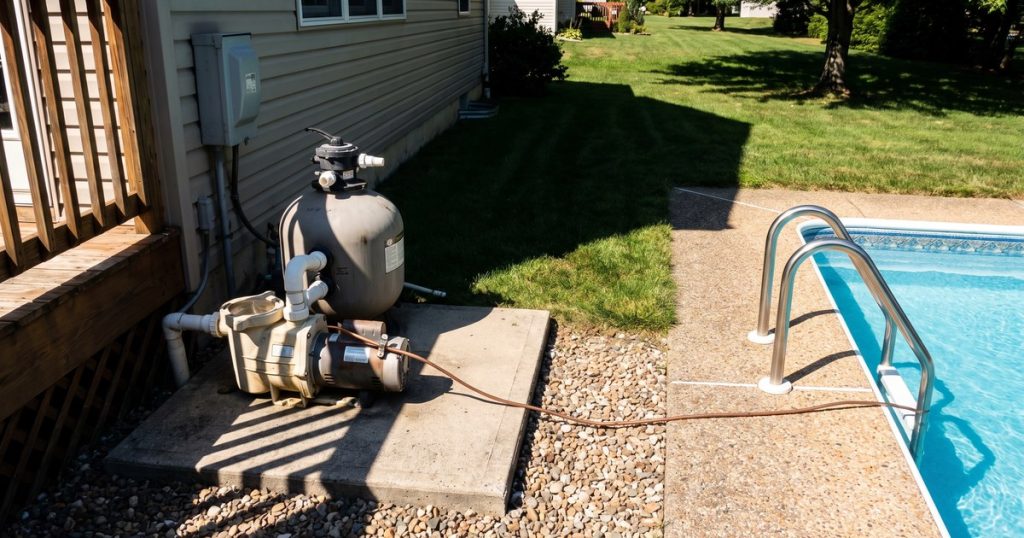
Pool wiring in Hollidaysburg, PA is the electrical work that powers and protects a swimming pool: the dedicated circuits for the pump and heater, the ground-fault protection on nearby outlets, and the equipotential bonding grid that keeps water, metal, and electricity from ever reaching different voltages. Installed to code, it is invisible. Installed wrong, it can turn a backyard pool into a shock hazard. The U.S. Consumer Product Safety Commission (CPSC) states that since 2002 it is aware of 33 fatalities that involved electrocutions in swimming pools and spas. That is why Pennsylvania treats pool electrical work as permitted, inspected construction. This guide covers what safe pool wiring involves, the code a Hollidaysburg project must meet, and how to plan the work before the first trench is dug.
Key takeaways
- Pool wiring covers dedicated circuits, GFCI protection, and equipotential bonding, not just an outlet near the water.
- NEC Article 680 sets the bonding and ground-fault rules, and Pennsylvania adopts the NEC through its Uniform Construction Code.
- Bonding uses a solid copper conductor no smaller than 8 AWG to tie every metal part within 5 feet of the pool to one common voltage.
- The CPSC is aware of 33 electrocution deaths in pools and spas since 2002.
- Pool electrical work in Pennsylvania needs a permit and inspection, so hire a licensed electrician who works in Article 680.
- Cost depends on load, distance from the panel, panel capacity, trenching, and bonding complexity, so an on-site assessment is the only accurate way to price a job.
What pool wiring in Hollidaysburg, PA includes
Pool wiring is a small electrical system, not a single connection. A code-compliant residential pool in Hollidaysburg typically needs a dedicated circuit for the filter pump, separate circuits for a heater or heat pump, low-voltage or line-voltage wiring for underwater and deck lighting, ground-fault protection on the equipment and nearby receptacles, and a bonding grid that links every conductive part around the water. An above-ground pool needs less trenching than an in-ground pool, but the same safety principles apply to both.
Pool lighting, landscape lighting, and outdoor electrical are all listed among the residential work on the Adams Electric residential services page. A pool draws on several of those skills at once, for a simple reason: water conducts electricity, bare feet complete a circuit, and metal railings, ladders, and pump housings sit within arm’s reach of swimmers. Every one of those elements has to be planned so that a fault trips a breaker instead of finding a person.
Bonding and GFCI protection carry the most safety weight
Bonding and ground-fault protection are the two features that most directly prevent shocks, and the code is specific about both. For bonding, NEC Article 680 requires a solid copper conductor no smaller than 8 AWG to connect metal parts within 5 feet of the pool, including ladders, handrails, the pump motor, and reinforcing steel in the pool shell. The water itself is bonded through a listed device or a conductive surface in contact with the water. The goal is an equipotential grid: if every conductive part sits at the same voltage, there is no voltage difference to push current through a swimmer who touches a metal rail while standing in the water.
Ground-fault circuit interrupter (GFCI) protection does a different job. A GFCI constantly compares the current flowing out to the current flowing back. When even a few milliamps go missing, meaning some current has found another path such as through a person, the device shuts the circuit off in a fraction of a second. Article 680 calls for ground-fault protection on pool pump circuits and on receptacles near the water. Bonding equalizes voltage so a fault is less dangerous; the GFCI cuts power when a fault appears. Neither one replaces the other, and a safe pool needs both.
Article 680, in three numbers
What bonding actually requires at the pool
Equipotential bonding and ground-fault protection are the two rules that carry the most safety weight, and the code is specific about both.
8 AWG
the smallest solid copper bonding conductor Article 680 allows
5 ft
every metal part within this distance of the pool must be bonded to one common voltage
33
electrocution deaths in U.S. swimming pools and spas that the CPSC is aware of since 2002
What the code requires: NEC Article 680 and the Pennsylvania permit
Pool wiring in Pennsylvania is governed by the National Electrical Code, which the state adopts through its Uniform Construction Code (UCC). The Pennsylvania Department of Labor and Industry administers the UCC and the codes it incorporates statewide, including NFPA 70, the formal name of the NEC. In practice, a new pool in Hollidaysburg or anywhere in Blair County needs a construction permit before work begins, and the electrical portion is subject to field inspection and approval.
The permit process usually runs in stages: plan review, an electrical rough-in inspection before anything is buried or covered, and a final inspection once the pool and its equipment are energized. That sequence exists so an inspector can confirm the bonding grid and the ground-fault protection are correct while they are still visible. Ask your electrician early who is pulling the permit and who is scheduling the inspections, and get the answer in writing before the trench is dug. You can see examples of completed local work on the Adams Electric projects page.
How pool wiring failures cause injuries
Faulty pool wiring is dangerous for two connected reasons: the shock itself, and what a shock does to a swimmer. Drowning is the larger overall hazard around pools. The CPSC’s 2025 submersion report estimates 357 pool or spa related fatal drownings reported per year from 2020 through 2022, and about 6,300 emergency-department-treated nonfatal drowning injuries per year from 2022 through 2024, both figures counting children younger than 15. Of those reported fatal drownings, 79 percent involved children younger than 5. Electric shock raises drowning risk directly, because a swimmer who feels a tingle or a muscle lock cannot always get out of the water on their own.
Warning signs are worth knowing. A tingling sensation while touching a rail or ladder, lights that flicker when the pump runs, a GFCI that trips repeatedly, corroded bonding lugs, or a heater that hums are all reasons to stop using the pool and call an electrician. These symptoms often point to a bonding connection that has loosened or corroded, or to a piece of equipment leaking current into the water. If you notice any of them, keep everyone out of the pool until the system has been inspected. Our FAQ page covers more of the small electrical warning signs homeowners tend to miss.
What drives the cost of pool wiring in Hollidaysburg, PA
Every pool is different, so the honest answer to “what will this cost” is that it depends on the job in front of us. Several factors move the number up or down. The electrical load matters first: a single-speed pump draws far less than a pump, a heat pump, and a saltwater system running together, and a bigger load may call for a heavier circuit or a service upgrade.
Distance is the next factor, because the farther the pool sits from the main panel, the more wire, conduit, and trenching the job needs. Panel capacity is a common surprise. An older Hollidaysburg home may not have room for the new circuits a pool needs, which can add a subpanel or an electrical panel upgrade to the scope. Bonding complexity varies too, since an in-ground pool with a concrete deck, metal fence, and reinforcing steel takes more bonding work than a simple above-ground pool. Permit and inspection fees, the condition of any existing wiring, and whether the work is a new install or a repair all play a part.
Because those variables interact, the only accurate way to price pool wiring is an on-site assessment. Reach out through the Adams Electric contact page and we will look at the site before quoting anything.
Choosing a licensed electrician near Hollidaysburg
Pool wiring is not a project for a general handyman or a weekend do-it-yourself effort. The code is detailed, the inspection is mandatory, and the failure mode is a shock in the water. Hire a licensed electrician who works in Article 680, handles the permit, and coordinates the required inspections. Ask whether they will bond the pool to code, provide ground-fault protection on the pump and nearby receptacles, and be present for the rough-in and final inspections.
Adams Electric is a family-owned contractor that has served Hollidaysburg, Altoona, Duncansville, and the surrounding Blair County communities since 1919. Working with a local team means the person planning your bonding grid also knows the local inspection schedule and the code edition Pennsylvania currently enforces. That combination is what keeps a pool safe long after the permit is closed.
Have your pool wiring looked at before the season starts
If you are planning a new pool in Hollidaysburg, or you have noticed a tingle at the ladder or a GFCI that keeps tripping on an existing one, book an on-site assessment. We will walk the bonding grid, check the pump and heater circuits and the ground-fault protection, confirm whether your panel has the capacity the pool needs, and tell you what the work involves before you commit to anything. Start on the contact page.
Frequently asked questions
Do I need a permit for pool wiring in Hollidaysburg, PA?
Yes. Pennsylvania adopts the National Electrical Code through its Uniform Construction Code, and installing a pool or its electrical equipment requires a construction permit before work starts. The electrical work is inspected at rough-in and again at final, so plan for those inspections as part of the project timeline.
What is equipotential bonding, and why does my pool need it?
Equipotential bonding ties every metal part within 5 feet of the pool to a common conductor, usually a solid copper wire no smaller than 8 AWG, so they all sit at the same voltage. When there is no voltage difference between the rail you touch and the water you stand in, there is nothing to push current through your body. It is one of the most important safety features in Article 680.
Does every outlet near my pool need GFCI protection?
Article 680 requires ground-fault protection on pool pump circuits and on receptacles near the water. A GFCI shuts the power off the instant it detects current leaking to ground, which is the kind of fault that causes shocks. A licensed electrician will confirm which specific circuits and outlets need protection for your layout.
Can I wire my own pool to save money?
It is strongly discouraged and, in Pennsylvania, the work must still be permitted and pass inspection. Pool wiring combines bonding, ground-fault protection, and load calculations that are easy to get wrong and dangerous when they fail. A licensed electrician carries the code knowledge and the liability coverage that a homeowner does not.
How much does pool wiring cost in Hollidaysburg, PA?
There is no flat rate, because the cost depends on the pool’s electrical load, its distance from the panel, whether your panel has capacity, how much trenching and bonding the site needs, and permit fees. The only reliable way to get a real number is an on-site assessment, which is why we look at the property before quoting a pool job.