
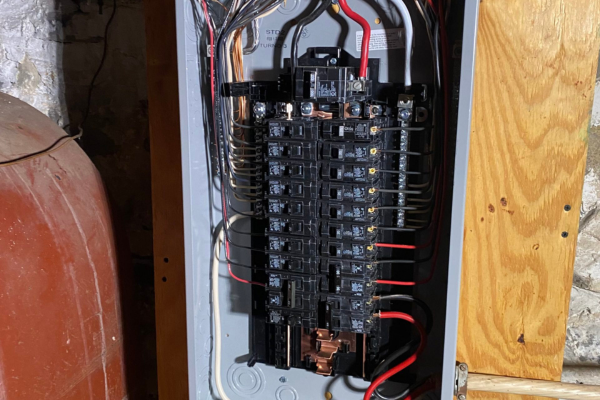
Why does a breaker keep tripping? Usually one of four causes: an overloaded circuit, a short circuit, a ground fault, or a worn breaker. Reset it once. If it trips again quickly, stop and call a licensed electrician.
A tripping breaker is not a nuisance. It is a warning. Your circuit breaker cuts power on purpose the moment it senses more current than the wire can safely carry. That is the job. When it keeps happening, the breaker is telling you something behind your walls needs attention, and often it is right.
Most of the time the cause is simple: too many things drawing power on one circuit. Sometimes it is not. A short circuit, a ground fault, or a tired breaker in an aging panel can signal a real fire risk. In an older Altoona home with early-1900s bones, the odds of the serious kind go up.
This guide covers the four common causes, the one safe check you can do yourself, and the line where you stop and call a pro. Adams Electric has served Altoona, Hollidaysburg, and Blair County since 1919, so we have seen every version of this. If your breaker trips again after a reset, or you smell burning, call 814-944-4621 or use our contact page.
Key Takeaways
- A breaker trips to protect you: it is doing its job, not failing at it.
- Reset it once. If it trips again fast, that is a hazard signal, not a glitch.
- Overloads are usually a DIY redistribution fix. Shorts, ground faults, and burning smells are not.
- Electrical distribution equipment ranks among the top causes of U.S. home fires (NFPA).
- Old panels and pre-1930s wiring make a tripping breaker more urgent, not less.
What Does It Mean When a Breaker Trips?
A tripping breaker means current on that circuit crossed a safe limit, and the breaker opened to stop it before wires overheat. This is protection working as designed. Electrical distribution and lighting equipment rank among the leading causes of U.S. home structure fires, third behind cooking and heating (NFPA). The breaker is your last line of defense against that risk.
So a trip is not a defect. It is a save. Wires carry only so much current before they heat up, and unchecked heat can scorch insulation and start a fire inside a wall where you would never see it. The real question is why the circuit hit its limit, because that answer tells you whether you have a five-minute fix or a wiring problem. The four causes below cover nearly every case we get called about.
What Are the Common Causes of a Tripping Breaker?
Four causes explain most tripping breakers: an overloaded circuit, a short circuit, a ground fault, or a worn breaker. Only the first is usually safe to sort out yourself. The other three point to a wiring or hardware fault, and arcing faults alone start more than 28,000 home fires a year and cause over $700 million in property damage (ESFI).
An overloaded circuit
An overloaded circuit is the friendly one. It happens when the total draw on a single circuit exceeds what the wiring is rated for. A space heater, a microwave, and a hair dryer running on the same bedroom line will do it. The breaker trips because the demand outran the supply, not because anything is broken.
You will notice a pattern. The trip lands when you switch on that one extra appliance, and it clears once you unplug something. That predictability is the tell, and it is why overloads are the one cause most homeowners can safely resolve on their own.
A short circuit
A short circuit is more serious. It occurs when a hot wire touches a neutral wire directly, letting a huge surge of current flow with almost nothing to slow it. The breaker trips instantly and hard. You may see a scorch mark, smell hot plastic, or hear a faint pop from an outlet or device.
Do not keep resetting a breaker that shorts. A short means damaged insulation, a faulty appliance, or a wiring fault somewhere on the line. This is a job for a licensed electrician who can find and repair the fault safely, not a reset-and-hope situation.
A ground fault
A ground fault is a cousin of the short. Here the hot wire contacts a grounded part, like a metal box or a wet surface, and current leaks off its intended path. These are common in kitchens, bathrooms, garages, and outdoor outlets, where code requires GFCI protection. Water and electricity make a dangerous pair. If a bathroom or outdoor circuit keeps tripping in damp weather, treat it as a ground fault until a pro proves otherwise, because it can signal moisture reaching your wiring.
A worn breaker or aging panel
Sometimes the breaker itself is the problem. Breakers are mechanical. They wear out and start tripping at loads they once handled fine, or worse, fail to trip when they should. In older Altoona homes we often find undersized panels, obsolete brands, or hardware aged past its service life.
An aging panel raises the stakes on every other cause. If the box is decades old and the breakers are tired, a tripping circuit is less a coincidence and more a system that has outgrown its home. That is when a panel evaluation earns its keep.
Which Causes Are Safe to Check Yourself?
Exactly one is broadly DIY-safe: a suspected overload, handled without opening anything or touching wiring. You can reset a tripped breaker once, and you can unplug devices to redistribute load. That is the safe limit. Arcing and connection faults behind the wall are a documented fire risk, so anything past a simple reset belongs with a licensed electrician (ESFI).
Here is the safe routine. Unplug the appliances on the affected circuit, push the tripped breaker fully to off, then switch it back on. That is one reset. Now plug your devices back in across different rooms and circuits so no single line carries the whole load.
What you should never do is different. Never open the panel and touch anything inside. Never bridge, tape, or wedge a breaker to stop it tripping. And never work on a live circuit. Those actions defeat the protection keeping your home safe, and they turn small faults into fires.
When Does a Tripping Breaker Signal a Real Hazard?
A tripping breaker becomes a hazard signal the moment it trips again right after a reset, or brings any warning sign with it. Because electrical distribution equipment is a leading cause of home fires, these symptoms are not worth a wait-and-see (NFPA). When you see them, cut the circuit and call a licensed electrician.
Watch for these red flags. A burning or hot-plastic smell near the panel or an outlet. A breaker or wall that feels warm to the touch. Buzzing, crackling, or a scorch mark. And the classic aging-home combo: frequent trips paired with flickering lights or two-prong outlets.
Older Altoona houses deserve extra caution. Knob-and-tube wiring was common until the 1930s, with cloth insulation that degrades over time and was never designed for modern loads (ESFI). Pre-1972 aluminum branch wiring is riskier too, roughly 55 times more likely to reach fire-hazard conditions at connections than copper (ESFI). If your home has either, a repeat-tripping breaker is a reason to act now. We cover the broader signs in our guide on signs your older Altoona home needs rewiring.
How Does an Aging Altoona Panel Factor In?
An aging panel turns an ordinary tripping breaker into a system-level question. Altoona grew as a railroad town, so much of its housing dates to the early 1900s. Homes built for a few lamps and a radio now run HVAC, EV chargers, and full kitchens. The panel is often the weakest link, and knob-and-tube wiring from before the 1930s only compounds it (ESFI).
The math is simple. An old 60 or 100-amp panel was never sized for modern life, so its circuits sit near their limit all the time and any small extra draw trips them. Frequent tripping in an older home is often the panel quietly saying it has run out of room.
This is where an upgrade changes everything. A modern 200-amp panel ends the daily nuisance trips and restores the safety margin an old box lost long ago. Costs vary by home, which we break down in our guide to electrical panel replacement cost, and most panel work in Pennsylvania needs a permit before it starts. Our team has handled everything from home panels to a 5,000-amp underground service in Duncansville, and you can learn about our century of service any time.
Frequently Asked Questions
How do I reset a circuit breaker?
Unplug the appliances on the affected circuit, push the tripped breaker fully to off, then switch it back on. That is one reset. If it trips again quickly, stop resetting and call a licensed electrician.
How can I tell if a circuit breaker is bad?
A breaker that trips with little or no load points toward a fault rather than an overload. A failing breaker is one possible cause, along with a short circuit or a ground fault, and they look alike from the outside, so have a licensed electrician diagnose it rather than resetting it again and again.
Is it safe to reset a tripped breaker myself?
Yes, resetting a tripped breaker once is safe. Unplug devices on that circuit, push the breaker fully off, then back on. If it holds, you likely had a simple overload. If it trips again quickly, stop. Electrical distribution equipment is a top cause of home fires, so a repeat trip needs a licensed electrician, not another reset (NFPA).
Why does my breaker trip when nothing is plugged in?
A breaker that trips with little or no load points away from an overload and toward a fault. A short circuit, a ground fault, or a failing breaker can all trip a nearly empty circuit. Since arcing faults alone start more than 28,000 home fires a year, this pattern warrants a professional diagnosis rather than repeated resets (ESFI).
How many times can I reset a breaker before it is dangerous?
Reset a breaker once. If it trips again soon after, treat that as a hazard signal and stop. Each forced reset on a real fault pushes current back into a circuit the breaker is protecting. Repeated resets can overheat wiring behind your walls, so call a licensed electrician instead.
Can an old electrical panel cause breakers to trip?
Yes. Aging panels, undersized capacity, and worn breakers all cause nuisance tripping, and they are common in Altoona’s early-1900s homes. Knob-and-tube wiring from before the 1930s adds risk because its insulation degrades over time (ESFI). If your panel is decades old and trips often, have it evaluated for a possible upgrade.
Does a tripping breaker mean my house could catch fire?
Not by itself. A working breaker actively prevents fires by cutting power during an overload or fault. The danger comes from ignoring repeat trips, defeating a breaker, or living with old wiring. Electrical distribution equipment ranks third among home-fire causes, so persistent tripping is a reason to get a professional inspection (NFPA).
When should I call an electrician about a tripping breaker?
Call a licensed electrician when a breaker trips again right after a reset, when you smell burning, when the panel or an outlet feels warm, or when trips come with flickering lights. In older homes with two-prong outlets or aluminum wiring, do not wait. You can reach Adams Electric at 814-944-4621 or through our contact page.
Do I need a permit to replace my electrical panel in Pennsylvania?
In most cases, yes. Pennsylvania’s Uniform Construction Code requires a permit before you install, alter, or replace an electrical system in a home (34 Pa. Code § 403.62). Enforcement is local, so confirm the process with your Blair County code office. Our full Pennsylvania permit guide walks through the details.
Get a Straight Answer From a Licensed Local Electrician
A breaker that keeps tripping is worth ten minutes of your attention and, past a simple reset, a licensed electrician’s eyes. Reset it once. Redistribute the load. If it trips again, smells hot, or lives in an older Altoona panel, treat that as the safety signal it is. Never do live work to chase the cause.
Adams Electric has kept Altoona, Hollidaysburg, and Blair County safely powered since 1919. We diagnose tripping circuits, repair faults, and upgrade tired panels for homes and businesses across central PA. Call 814-944-4621 or reach us through our contact page for residential or commercial service. If the answer is a panel upgrade, our guide to whole-house generator and backup planning is a smart next read.